0
Reflections on a Bicultural Family
Posted by Unknown
on
12:53:00 PM
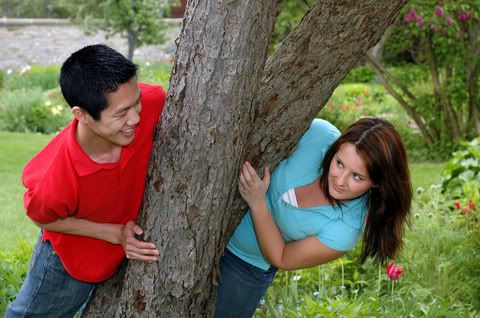
Can a biracial couple navigate the many conflicts of their cultures?
One afternoon while in Chinatown, my family and I stopped to eat at a restaurant. Once seated, I looked around and noticed the patrons and staff were all Asian. I looked down at my place setting and saw only chopsticks, no silverware. Turning to my husband, I remarked, “This must be a good place, we’re the only White people in here.” My husband replied with a grin, “No, You are the only White person in here.”
As is evident from the above exchange, I sometimes forget that I am a minority in my own family. I am a Caucasian married to a first generation Filipino American, which makes my children biracial. By calling my family “White”, I wasn’t referring to their skin color. My husband and children have darker skin than I and, at least racially, they would not fit the “White” category. Instead, I meant our culture.
My husband is so Americanized that he has been told by other Filipinos that he is “not really Filipino.” In fact, he doesn’t understand or feel comfortable with many of his parents’ customs. Many years into an interracial marriage, and three children later, I’ve discovered that the issues arising in my Asian/Caucasian union are not about race or color, but about conflicts of culture. Because my husband is culturally more American than Asian, the differences only become evident when we are with his parents and relatives.
For example, I once called one of his aunts by her first name, without first using the proper title of “Aunt”. Her look of dismay was my only clue that I had done something wrong, although I didn’t know exactly what. I later thought about the incident and remembered a time when another relative had acted in the same manner when I had called my own uncle by his first name. An Asian friend later explained that calling a relative by their first name was considered the height of disrespect. When asked, my husband said that he had not ever thought to tell me because, for him, it was second nature to use a title when addressing a relative.
Another issue was how to address my in-laws. I had always called them by their first names, as is the American custom. I found out, after more than a decade of being married, that not only was I was expected to call them “Mom” and “Dad”, but that they had been seething over this lack of courtesy for years. Apparently, I had even humiliated them in front of their friends by using their first names.
When I discovered my mistake, I was upset and dismayed. From my perspective, it would have been disrespectful to call them “Mom” and “Dad” without an invitation; from their viewpoint, I was being deliberately disrespectful by not using the endearments. The sad thing is that no one ever brought the issue to my attention. Had they explained this to me, I would have certainly complied.
Because my experiences seem to be mirrored by friends who are also in Asian/Caucasian marriages, I’m starting to think that lack of communication is a part of the culture. These things just aren’t discussed. A Chinese friend, who is married to a Caucasian, once explained, “If you were to ask them what was wrong, they would say everything was fine, they wouldn’t tell you what was bothering them. My husband just doesn’t address anybody in my family by name, so that he doesn’t make a mistake.” I wish I had thought of that!
Food is another source of conflict. When my husband’s family visits our home, I cook because I consider it rude for guests to have to make their own food. However, I wouldn’t dare try to cook Filipino food, even though I love it! As a result, they get my American-style food. Even though I always ask their opinion on what I should make, and I try my best to find dishes that will appeal to them, it doesn’t always go well. The rice isn’t the right type or isn’t cooked properly. They balk at unfamiliar foods. I find it frustrating that I’m expected to try bitter melon and blood pudding, but lasagna is enough to send them running for the nearest Chinese restaurant.
Finally, cultures can clash over something as simple as an adjective. When my husband’s aunt once called my five-year-old daughter sexy, I was offended by the application of that very adult term to my little girl. It wasn’t until I noticed other relatives calling her dress sexy, a book sexy, a pair of shoes sexy - throwing around the word with such abandon - that I finally realized it must not have the same connotation in their culture. My best guess is that they thought the word meant cute or pretty.
Later, as I reflected upon my strong, emotional response to the situation, I wondered if maybe this is how they feel when I do something against the grain of their culture. Maybe their response to my using their first names is just as visceral - and even, perhaps, subconscious. I wish now I had brought it up for discussion. Maybe we could have shared a laugh over the misunderstanding?
So many rifts and hurt feelings have occurred over the years on both sides of the family, simply due to lack of communication and understanding. I wish they would tell me the rules. I would be happy to follow them if I knew what they were. I’ve grown tired of feeling like I flunked a test for which I was given no study guide. Although I do believe that my Filipino relatives love me and my children, will this White girl ever truly be accepted? I really don’t know, but I’m going to keep trying.
-by T.A. Leonard


Post a Comment